
BestOnlyFans tracks how page structures shape spending. Instead of collecting a recurring base fee, a creator who sets the page price to $0 earns from pay-per-view messages, tips, paid chat, and custom requests. This article explains the platform mechanics behind zero-dollar subscription structures: how the tier sits inside the account architecture, how PPV unlocks are priced and capped, how tipping layers onto free interaction, and how revenue is distributed when no subscription base exists. BestOnlyFans refreshes its rankings every month.
The goal is technical understanding, not promotion. You will see where the platform sets hard limits, where creators control pricing, and where design choices shape what subscribers actually spend. Ranking sites exist partly because OnlyFans has no built-in discovery feed or directory, so free pages depend on external traffic and internal conversion design.
OnlyFans Tier Architecture: Zero-Dollar Positioning
OnlyFans accounts sit in one of two base configurations: a paid page with a subscription price between $4.99 and $49.99, or a free page set to $0. The zero-dollar option is not a discount tier inside a paid page; it is a separate page type with its own revenue routing. A creator can run both simultaneously, which is why you often see a free account and a paid account promoting each other.
Promotion periods work differently too: a paid page can run a first month below $4.99, for example $3, but that is a temporary promotional rate, not a base price change.
The tier lets a creator test content themes before committing to a paid offer, absorb traffic from outside platforms without a paywall bounce, and build a warm audience that already trusts the creator before any money changes hands.
Pay-Per-View Message Infrastructure and Pricing Controls
A creator sends a direct message containing locked media, and the recipient sees a preview rather than the full content. The unlock price is set by the creator within platform limits, and unlock prices for PPV messages can go up to $50. Nothing is charged until the subscriber chooses to unlock, which keeps the base interaction free while placing a micro-paywall on specific content.
Creators control several elements that influence whether a follower unlocks, and these elements repeat across most free pages:
- Preview thumbnail tease that shows enough to signal value without revealing the full media
- Word count abbreviation in the message text so the ask stays short and readable
- Price display positioning placed near the unlock button rather than buried in text
- Unlock confirmation friction that requires a deliberate tap, preventing accidental charges
- Expiration urgency indicators that signal a limited window for the offer
- Bundle combination offers that group multiple unlocks at a single combined price
PPV arrives as a direct message in the chat thread, not as a public feed post, so the content is only visible to followers of that specific page. There is no platform-wide discoverability push behind a PPV message; distribution is entirely the creator’s follower list. That is one reason free page operators rely so heavily on external promotion channels, including community threads and link directories.
Tip: unlock prices are charged at the moment of confirmation, so check the displayed amount before tapping. If you are unsure about a $30-$50 unlock, wait a day, because most PPV offers remain in the thread and the content is not usually removed if you decline.
Tipping System Integration and Behavioral Triggers
A subscriber can send a tip at any time without unlocking content, and tips can reach $100. Because there is no subscription fee acting as a baseline payment, tips often function as the voluntary equivalent of the monthly fee a paid page would collect automatically.
A common placement order looks like this:
- Initial follow acknowledgment message that establishes the relationship
- Post-unlock content consumption, when the subscriber has just received value
- Live stream participation, where tips are visible to other viewers
- Milestone celebration context, such as a follower count target
- Direct message response, where a tip accompanies a reply
- Content request negotiation, where a tip precedes a custom ask
Social proof matters here. When tips are public during live sessions, other viewers see the amounts and the creator’s response, which normalizes the behavior. On a free page, tips are the clearest signal that a follower intends to keep spending, so creators often track tippers separately and prioritize them in chat replies.
Revenue Distribution Without Subscription Base
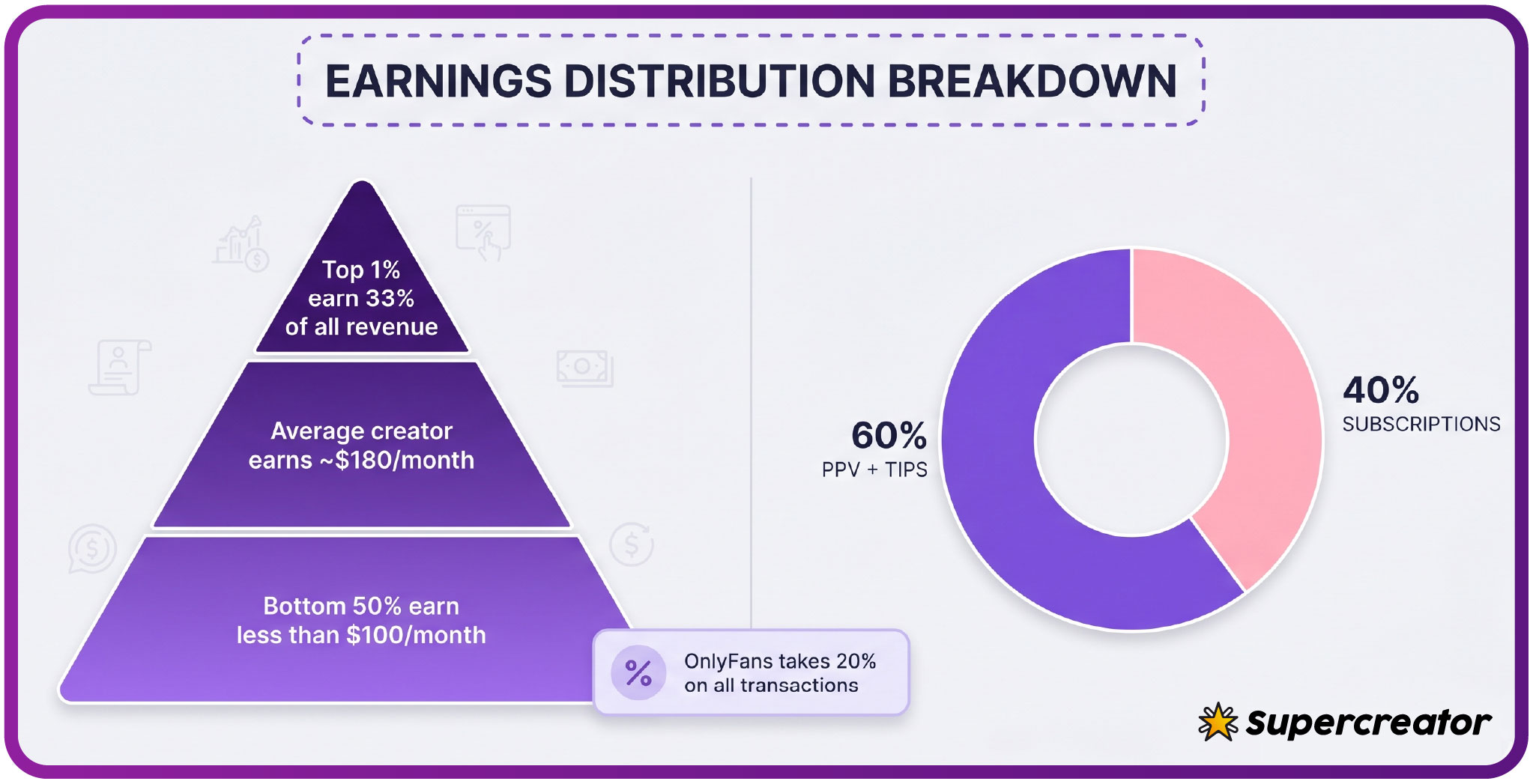
The platform fee is 20% on everything, and the creator keeps 80%. The difference on a free page is not the fee structure but the absence of a guaranteed recurring line item. The creator compensates by growing the follower count and by designing multiple small purchase points rather than one recurring charge.
| Revenue Source | Creator Keep | Typical Price Range |
|---|---|---|
| PPV message unlock | 80% of unlock price | Commonly $5-$50 per unlock |
| Tips | 80% of tip amount | $5-$100, set by sender |
| Paid chat message | 80% of message price | Commonly $3-$5 per message |
| Custom request | 80% of agreed price | Varies, negotiated in chat |
Paid chat charges per message, commonly $3-$5, and it converts conversation itself into a billable event. On a free page this replaces part of the intimacy that a paid subscription would otherwise bundle into the monthly fee. Volume, not price, drives the economics.
Subscriber Experience Design on Zero-Dollar Access
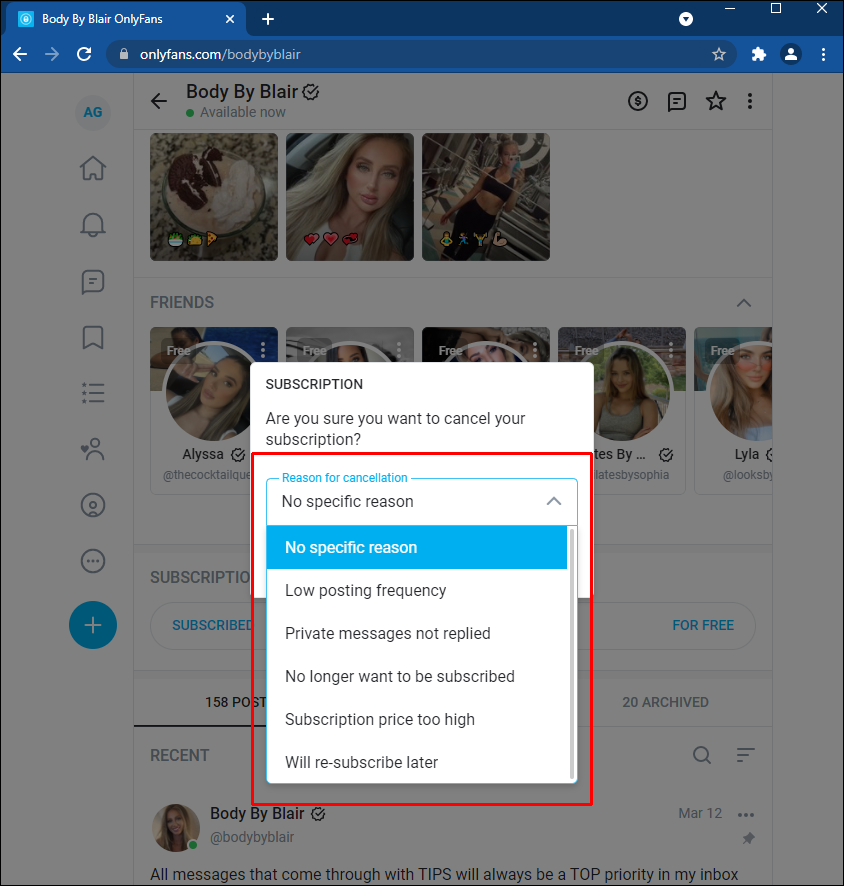
There is no checkout step to follow the page, so the follower list grows without payment prompts. Because no recurring charge exists, there is also no cancellation decision to make, which removes the moment where a subscriber typically re-evaluates whether to keep paying. Spending friction is concentrated at the unlock and tip buttons instead of at the page level, so each purchase is a small, isolated decision.
Account setup still involves standard verification.

Access Boundaries and Content Availability Patterns
The follower can see the page, receive messages, and interact, but several content categories stay behind paywalls.
- No feed post visibility beyond previews, since full posts are often locked
- Story and short-form content reserved for paying subscribers
- Live viewing time restrictions for non-tipping followers
- Comment posting barriers on select posts
- Direct message initiation that costs money before the creator responds
- Archive depth cutoff, where older content is not reachable without unlock
- Creator response priority ranking that favors tippers and unlockers
On a paid page, the subscription itself is the paywall, and most content inside is open once you are in. On a free page, the paywall is fragmented across individual messages and requests, so access is itemized rather than bundled.
Conversion Pathways: Free to Paid Page Migration
Because the platform charges 20% on all revenue regardless of page type, the creator’s goal is not to avoid the fee but to increase predictability. A paid subscriber paying $4.99-$15 monthly is more stable than a follower who unlocks once and disappears.
Creators use a small set of migration techniques, and they tend to appear together rather than alone:
- Paid page content sampling, where a preview of subscription-only material is shared on the free page
- Exclusive content type announcements that name what is not available on the free tier
- Follower count threshold pricing that ties a rate to a milestone
- Collaborative content access requirements that route through the paid page
- Platform feature restriction messaging that explains what paid access unlocks
External promotion supports this migration. Creators often coordinate launch traffic through community threads, and curated lists of the best reddit threads to promote onlyfans are used to time a paid page launch against a free page’s follower growth. The free page builds the audience; the paid page converts it into recurring revenue.
One mechanical constraint matters when prices change. When a creator raises the price, auto-renew stops, and existing access lasts until the paid period ends. That rule protects subscribers from silent price increases on paid pages, and it is one reason some creators keep a free page as a stable entry point while adjusting paid pricing separately.
Comparative Cost Analysis for Subscribers
Whether a free page costs you more than a subscription depends on your actual spending pattern, and the platform does not calculate that for you. You have to total your own activity.
Run the numbers in this order to get a real monthly figure:
- Total your PPV unlock charges for the month
- Add tip frequency multiplied by your average tip amount
- Include any custom request payments
- Estimate time spent on the free page as a rough engagement measure
- Compare against a comparable paid page subscription at $4.99-$15 monthly
- Judge whether the total value matched what you spent
| Spending Pattern | Monthly Estimate | Paid Page Equivalent |
|---|---|---|
| Light: one or two unlocks, no tips | About $10-$25 | Comparable to a mid-range subscription at $10-$15 |
| Moderate: several unlocks plus occasional tips | About $30-$60 | Exceeds most paid tiers; two paid subscriptions cost less |
| Heavy: frequent unlocks, regular tips, paid chat | $75 and upward | Far exceeds the $49.99 maximum paid subscription |
The pattern is straightforward. Light spenders often pay roughly what a subscription would cost, moderate spenders usually pay more, and heavy spenders pay several times the maximum paid tier.
Methodology note: the figures here come from platform-level rules such as the 20% fee, the $4.99-$49.99 paid range, and the $50 PPV cap. BestOnlyFans compares page structures using those rules rather than individual creator data, and no creator earnings are estimated.
FAQ
Is there any limit to how many PPV messages a free page can send me?
There is no fixed platform cap on how many PPV messages a creator sends, but each one requires your confirmation before any charge applies.
Why do some creators run both a free and a paid OnlyFans page?
The two pages serve different functions. The free page grows a large audience with no payment barrier, while the paid page converts part of that audience into predictable monthly revenue. Running both lets a creator use the free page as a testing and acquisition layer without giving up recurring income.
How can I tell if I’m spending more on a free page than a subscription would cost?
Add up your unlocks, tips, and paid chat for one month, then compare the total to a $4.99-$15 subscription. If your total exceeds roughly $15, a paid subscription would usually cost less for similar access.
Do creators earn less from my PPV purchases than from subscription fees?
The creator keeps 80% either way, since the platform fee is 20% on all revenue. The difference is predictability rather than rate. A subscription arrives monthly without extra action, while a PPV unlock depends on a one-time decision, so creators balance both sources instead of relying on one.